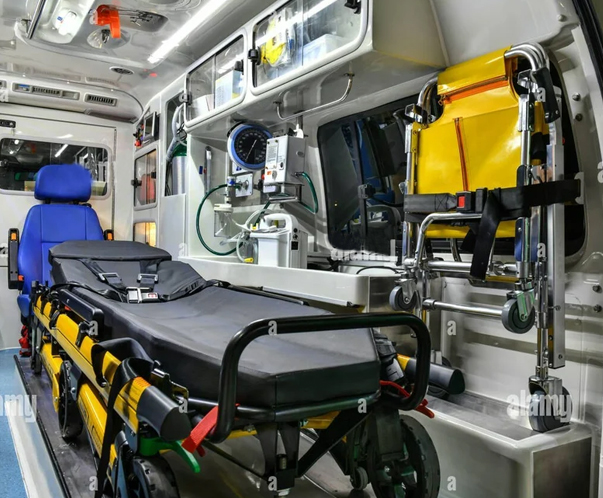
ICU Ventilator Ambulance Services provide advanced life support care during patient transportation. These ambulances work like a moving Intensive Care Unit, ensuring continuous medical support for critically ill patients.
Key Medical Facilities Available
1. Ventilator Support
Helps patients who cannot breathe properly
Ensures controlled oxygen supply
2. Cardiac Monitoring System
Monitors heart rate and ECG
Detects any sudden changes
3. Oxygen Supply System
High-capacity oxygen cylinders
Continuous oxygen delivery
4. Infusion & Syringe Pumps
Accurate medicine administration
Supports critical medication flow
5. Defibrillator
Used in cardiac emergencies
Restores heart rhythm
6. Emergency Medicines
Life-saving drugs readily available
Medical Team on Board
Qualified doctor or critical care specialist
Trained ICU nurse or paramedic
Experienced ambulance driver
Situations Where ICU Ventilator Ambulance Is Required
Inter-hospital transfer of critical patients
Severe respiratory failure
Heart attack or cardiac complications
Brain injury or unconscious patients
Post-surgery critical condition
COVID or severe pneumonia cases
Importance of ICU Ventilator Ambulance Services
Provides continuous ICU care during transport
Reduces risk during long-distance transfer
Ensures patient stability
Saves valuable time in emergencies
Acts as a bridge between hospitals
Main Facilities and Features
1. Clean and Covered Cabin
Ensures privacy and dignity
Protects from external environment
2. Body Stretcher or Platform
Made of strong, hygienic material
Allows safe placement of the body
3. Cooling or Preservation System (if required)
Slows decomposition
Maintains body condition
4. Smooth Loading and Unloading
Roller or lift system
Reduces manual effort
5. Proper Ventilation
Maintains cleanliness
Controls unpleasant odour
Dead Body Freezer
A Dead Body Freezer is a refrigeration unit used to preserve a deceased body by maintaining a low temperature. It slows decomposition, controls odour, and maintains hygiene until post-mortem or funeral rites are performed. Dead body freezers are commonly used in hospitals, mortuaries, funeral homes, and ambulances. They help ensure the dignity and safety of the deceased and the surrounding environment.
Main Components and Features
1. Temperature Control System
Maintains low temperature (usually –5°C to +5°C)
Slows bacterial growth
2. Insulated Cabinet
Prevents heat entry
Maintains constant cooling
3. Stainless Steel Body Tray
Easy to clean and disinfect
Ensures hygienic body placement
4. Power Backup System
Battery or inverter support
Ensures uninterrupted cooling
5. Odour Control Mechanism
Prevents unpleasant smell
Maintains cleanliness
Importance of Dead Body Freezer
Preserves the body for longer duration
Maintains dignity of the deceased
Prevents health hazards
Supports legal and medical procedures
Helps families arrange funeral rites
Types of Dead Body Freezers
Single Body Freezer – For one body
Multiple Body Freezer – For hospitals and mortuaries
Portable Dead Body Freezer – For home or temporary use